
Education
Punjab CM Urges Teachers to Preserve Heritage and Inspire Youth
Anandpur Sahib, Punjab: On a sunny Sunday, Chief Minister Bhagwant Mann spoke to teachers about their important role in shaping the future of Punjab.

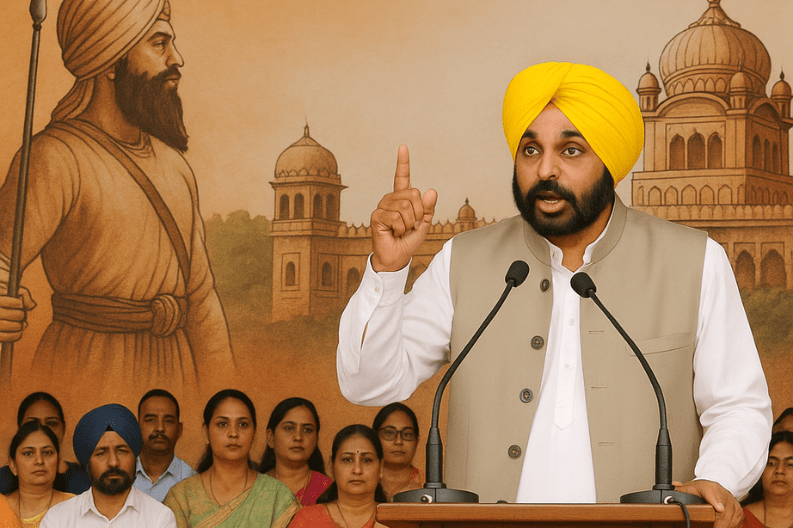
The Punjab CM urges teachers to preserve heritage during a special Teacher’s Day event held in Anandpur Sahib, Punjab. On a bright Sunday morning, Chief Minister Bhagwant Mann met hundreds of teachers and praised their contribution to building the future of the state. He called teachers the “true builders of the nation” and urged them to teach students about Punjab’s rich culture and glorious history.
CM Mann said teaching is not just a job but a mission. Being the son of a teacher, he understands the dedication, patience, and love that go into shaping young minds. He encouraged teachers to pass on Punjab’s traditional values, language, and heritage to ensure that the next generation remains connected to its roots.
This year has been especially difficult for Punjab because of devastating floods. Mann informed the audience that 3,200 government schools and 19 colleges were severely damaged. Additionally, nearly 8,500 kilometers of roads and 2,500 bridges were washed away. Despite this destruction, he said that the spirit of Punjabis remains strong.
The Chief Minister also mentioned that floods ruined crops across five lakh acres of farmland. He highlighted how this affected farmers and their families, yet he praised the courage and unity of people who stood together during this crisis. According to him, such strength is what defines Punjab’s character.
Mann also appreciated teachers who continued supporting students even during the floods. Many teachers helped local families, offered shelter in schools, and provided moral support to children who lost their homes. He said, “Such acts of humanity are rare in the world.”
During the event, 71 teachers received the State Teacher Award for their outstanding work. Mann said these awards are not just honors but symbols of gratitude for those shaping young lives. Recognizing teachers, he said, is essential to inspire others to serve with equal passion and honesty.
The Chief Minister explained the deeper meaning of the word “Guru”, derived from Sanskrit: “Gu” meaning darkness and “Ru” meaning remover. A teacher, he said, removes the darkness of ignorance and replaces it with the light of knowledge. He added that teachers are like sculptors who carve young students into doctors, engineers, artists, and leaders of tomorrow.
Another key announcement made by CM Mann was about a heritage walkway leading to Takht Sri Kesgarh Sahib in Anandpur Sahib. This project, launched after 55 years, aims to preserve Punjab’s spiritual and cultural legacy. The walkway will showcase the state’s art, history, and traditional architecture, attracting tourists and teaching the youth about their ancestral pride.
Mann said that even though Punjab faces natural disasters, the government remains committed to improving education. Investments are being made to rebuild schools, train teachers, and modernize classrooms. The goal is to give students the best learning environment while keeping cultural education alive.
He also shared that Punjab now has world-class trained teachers in government schools. These educators use modern teaching techniques and also inspire moral and cultural learning. Mann emphasized that strong teachers mean strong students, and strong students mean a strong Punjab.
In the end, CM Mann said that teachers carry the responsibility of preserving Punjab’s soul. By teaching about the state’s history, art, and language, they ensure that future generations never forget their roots. The event concluded with applause as teachers pledged to continue their mission with dedication and pride.
As the Punjab CM urges teachers to preserve heritage, this message reminds everyone that education is not only about knowledge, it is also about keeping culture, identity, and values alive for generations to come.


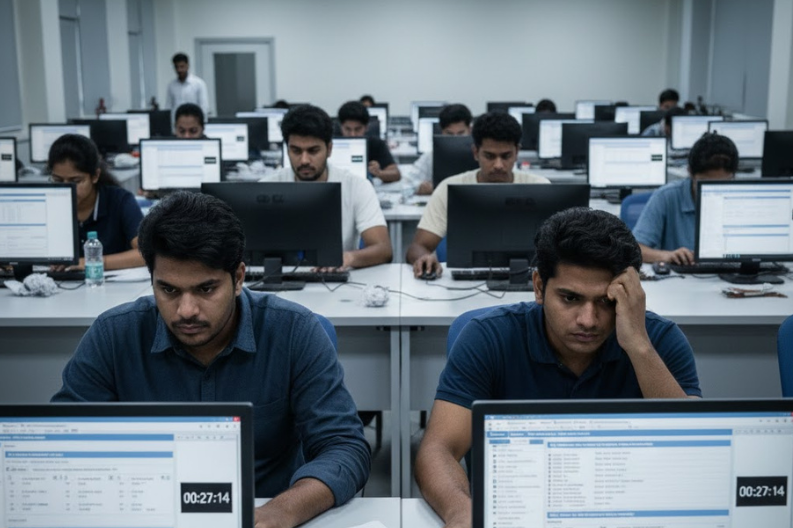
The CAT exam analysis slot 3 reveals that the final session of CAT 2025 proved moderately difficult for most candidates. IIM Kozhikode conducted the Common Admission Test on Sunday, with the third slot running from 4:30 pm to 6:30 pm. Approximately 2.58 lakh students appeared for the exam across all three slots nationwide. Moreover, the overall attendance reached around 86 percent, showing strong participation.
Candidates found the Quantitative Ability (QA) section particularly challenging in the third slot. Experts from Career Launcher noted that QA emerged as the toughest section of the entire day. The section contained 22 questions that required multi-step reasoning under time pressure. Consequently, students estimated that scoring just 5-6 correct answers could secure the 90 percentile mark.
In contrast, the Verbal Ability and Reading Comprehension (VARC) section remained relatively manageable. Students worked through 24 questions in 40 minutes, following the established pattern from previous years. Furthermore, the reading comprehension passages, though occasionally dense, featured straightforward questions. Experts rated this section as easy to moderate, similar to the earlier slots. Additionally, candidates estimated that 8-9 net correct answers would likely place them around the 90 percentile range.
The Data Interpretation and Logical Reasoning (DILR) section presented moderate difficulty throughout the day. This section comprised 22 questions that demanded careful prioritization. Many students highlighted that certain caselets required extended time to solve completely. Therefore, experts suggested that 5-6 solid correct attempts would be sufficient for the 90 percentile. The logical depth and data complexity exceeded expectations for several candidates.
The exam followed the standard structure across all slots. Each session included 68 questions distributed across three sections, with 120 minutes to complete the test. The marking scheme awarded three marks for each correct answer while deducting one mark for incorrect responses. However, unattempted questions carried no penalty, allowing strategic question selection.
Across India, nearly 6,500 candidates appeared for the exam in the tricity region alone. In Mohali, students took the test at two centers located in Sectors 82 and 83. Meanwhile, IIM Sirmaur and IIM Amritsar continue attracting northern region aspirants. Panjab University’s University Business School also remains a preferred choice, with cutoffs expected around the 85 percentile.
Student reactions varied across sections. Himanshi Sharma from PEC Chandigarh shared that the verbal section went smoothly for her. Nevertheless, she found the Math and DI sections tougher than expected. Similarly, Nishant Rathour from Panjab University described the DI section as particularly tricky, though he felt satisfied with his overall performance.
Compared to CAT 2024, this year’s exam showed a slight increase in difficulty. Specifically, DILR emerged as clearly more difficult than last year, while VARC remained marginally easier overall. QA maintained similar difficulty levels but leaned toward the tougher side, especially in the final slot.
CAT 2024 Slot 3 Analysis: कैट एग्जाम स्लॉट 3 एनालिसिस; वीएआरसी कठिन और डीआईएलआर सेक्शन आसान रहा#CAT #CATExam #CAT2024 #CATExam2024
Read more at: https://t.co/IXjsOPQmgk pic.twitter.com/Tc3JnCmero
— Careers360 (@careers360) November 24, 2024
Early estimates suggest that candidates scoring 25-27 net correct answers across all sections in the third slot may reach the 99 percentile. This reflects the overall challenging nature of the session. The results are expected by the end of December, after which shortlisted candidates will proceed to the essay writing and personal interview stages.
The CAT exam analysis slot 3 indicates that smart question selection proved essential for success. Students who managed their time effectively and prioritized accessible questions likely performed better across all sections.
Education
Ludhiana: Guest Faculty Finally Receive 10-Month Salary Arrears
In Ludhiana, a big win for guest faculty members happened recently.
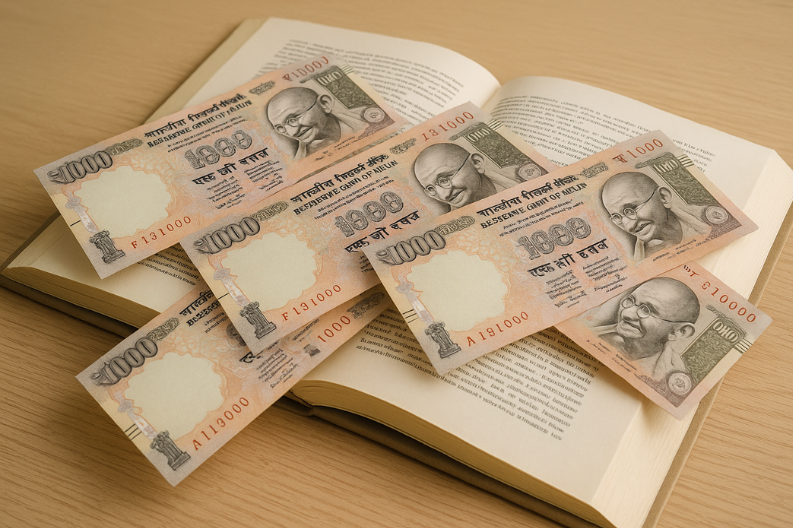
A major relief arrived in Ludhiana after the guest faculty finally receive 10-month salary arrears, bringing joy to hundreds of teachers who had waited almost a year for their pending payments. The Guest Faculty Assistant Professors United Front celebrated this moment and appreciated the government for responding with care and speed.
Leaders of the United Front: Ravinder Singh Mansa, Gursev Singh Patiala, Paramjit Singh, and Muhammad Tanveer, thanked Higher Education Minister Harjot Singh Bains for his quick action. They said his involvement played a key role in clearing the long-pending salaries, which had caused stress for many teachers.
Guest faculty members have supported Punjab’s education system for more than twenty years. They teach in government colleges across the state and continue to guide thousands of students every year. Because of their long contribution, many believe they deserve stronger recognition and fair job security.
In 2022, the Aam Aadmi Party government increased the honorarium for guest professors. This move showed that the state understands its needs and values its service. However, when the government hired permanent professors later, new administrative steps caused delays. As a result, salaries in 25 colleges got stuck, leaving many guest faculty members under financial pressure.
Fortunately, coordinated efforts between the principal secretary and the director of higher education helped end this problem. They removed procedural hurdles and ensured payments finally reached teachers. The United Front also praised the director of higher education for honest and steady leadership during this difficult period.
Teachers across Punjab shared how delays affected their daily lives. Many said they continued teaching with dedication despite financial hardship. Ravinder Singh urged the government to regularize guest faculty services so teachers who served for decades can gain stable positions. He explained that permanent jobs would reflect the true value of their contribution to higher education.
Guest faculty members have shaped the academic journey of countless students. Because of their constant support, many colleges have been able to run smoothly even during staff shortages. Giving them job security would not only help teachers but also improve student learning.
Better treatment of educators leads to better education for everyone. When teachers feel supported, they can focus fully on teaching, guiding, and inspiring young minds. Moreover, regular pay and stable employment help create stronger academic environments.
In conclusion, clearing the pending salary dues marks a positive step for Punjab’s education sector. It shows that the government is willing to listen and respond to teachers’ concerns. Many hope this progress continues, offering more recognition and long-term support, especially after the guest faculty finally receive 10-month salary arrears.
Artificial Intelligence (AI) has transformed from a futuristic dream into a booming global industry. Trillion-dollar valuations, skyrocketing chip demand, and rapidly expanding data centers have convinced many that AI will change the world. And in many ways, it will. But beneath the excitement, the rapid pace of investment and financial engineering has raised an important question: Are we living through an AI Bubble?
Just like the dot-com era of 1999 or the US housing bubble of 2008, an “AI Bubble” refers to a dramatic rise in valuations, investments, and expectations-far beyond what real-world fundamentals justify. When these expectations eventually confront reality, the bubble risks bursting.
This article explains what an AI bubble is, how it forms, why it matters, and how investors and industries should view it.
1. Understanding the Core Idea of a Bubble
A “bubble” is an economic condition where asset prices rise sharply because of hype, momentum, and optimism-rather than actual performance and revenue.
In the context of AI:
- Companies are investing heavily in computing power and data centers.
- Investors are pouring money into AI startups at record valuations.
- Tech giants are spending tens of billions on chips, servers, and software.
- Everyone assumes that AI will soon generate massive profits.
A bubble forms when expectations grow much faster than actual, sustainable earnings.
In other words:
A bubble is created when we assume infinite growth based on finite evidence.
2. Why AI Is Attracting Trillions of Dollars
Before calling it a bubble, we must understand why this technology attracts so much money.
AI promises:
- Faster automation
- Better productivity
- New business models
- Breakthroughs in medicine, education, finance, robotics, and more
- Massive time and cost savings for enterprises
Global companies do not want to miss out on a technological shift that could determine the next generation of winners in the economy.
There’s nothing wrong with this. Innovation requires investment.
The issue begins when these investments turn speculative, detached from realistic outcomes.
3. What Creates an AI Bubble?
a. Exponential Investment vs. Slow Monetization
AI models (LLMs, diffusion models, robotics brains) need:
- Immense GPU power
- Large data centers
- Cheap electricity
- High-bandwidth networking
- Engineering teams
- Safety teams
- Product teams
Yet, despite billions spent, AI revenue is still small. Except for a few giants like Google and Microsoft, most companies haven’t found a profitable business model.
If expenses rise faster than revenue, valuations can become artificially inflated.
b. Circular Financing
In a healthy economy, money flows like this:
Investor → Company → Revenue → Profit
But in bubbles, the flow becomes circular:
Investor → Company A → Company B → Company A
Example pattern:
Company A invests in Company B → Company B uses the funds to buy Company A’s products → Company A’s revenue goes up → valuation goes up → investors put more money.
It creates an illusion of demand-when in reality, the cash keeps cycling inside the same loop.
c. Hidden Debt and Financial Engineering
Some companies don’t want to show massive AI-related debt on their balance sheets. So they create:
- SPVs (Special Purpose Vehicles)
- Leasing structures
- Off-balance-sheet borrowing
- Vendor financing arrangements
This makes their main company appear financially healthy, even when huge risks are quietly accumulating elsewhere.
This is similar to the 2008 housing bubble, where mortgage risks were hidden inside complex derivatives.
d. GPU and Data Center Mania
An AI model isn’t just software-it lives inside expensive data centers packed with GPUs. The cost of building these facilities has exploded.
But here is the issue:
- GPUs depreciate quickly
- New generations release faster than before
- The hardware becomes obsolete
- Data center rental rates fluctuate
- Electricity and cooling costs rise
- AI demand is not guaranteed
If the business model does not justify massive capex, the investment becomes risky.
4. Fake Demand and Overreaction to Geopolitics
AI chips also became expensive because geopolitics created artificial scarcity. Restrictions on selling high-end chips to countries like China created a “shortage premium.” Companies started hoarding chips, not because they needed them immediately, but out of fear of missing out.
This artificial demand can collapse quickly once supply stabilizes.
5. AI Hype Across Non-Tech Industries
In the dot-com era, every company rushed to add “.com” to their name.
Today, something similar is happening:
- AI toothbrush
- AI washing machine
- AI refrigerator
- AI hair dryer
- AI fan
- AI cooker
- AI helmet
- AI vacuum cleaner
Most of these “AI-enabled” products do not provide any meaningful intelligence. But companies do this to attract investor money and media attention.
When hype becomes a strategy, a bubble is already forming.
6. Historical Parallels: How Bubbles Usually Work
Dot-Com Bubble (2000):
- Companies grew without revenue
- IPOs doubled on listing day
- “Internet will change everything”
- But most firms had no profits
- Bubble burst when investors demanded real cashflows
Housing Bubble (2008):
- Excessive borrowing
- Hidden risks
- Overconfidence that prices will always rise
- Collapse triggered a global recession
AI Bubble Today:
- Massive capex
- Hidden debt
- Unrealistic expectations
- Companies using AI tag for hype
- Concern that revenue may not catch up soon
7. Is AI Itself a Bubble? Absolutely Not.
Artificial intelligence is real. It is transformative, and it’s here to stay.
But the financial ecosystem around AI may be inflated.
The internet survived the 2000 crash.
Housing still exists after 2008.
But the companies built on unrealistic promises disappeared.
Similarly, AI will remain essential for the next 50+ years-but many AI businesses may not survive the financial correction.
8. When Can an AI Bubble Burst?
Predicting exact timing is impossible.
But bubbles usually burst when:
- interest rates rise
- profitability lags
- capital becomes expensive
- debt accumulates
- growth expectations fail
- competitive pressure increases
- investors look for safer opportunities
If companies cannot turn today’s multi-billion-dollar investments into sustainable revenues, correction becomes inevitable.
9. What Happens If the AI Bubble Bursts?
Short-term impact:
- Stock market correction
- Valuations of AI startups collapse
- GPU and data center prices drop
- Over-leveraged firms face bankruptcy
- Investors lose money on speculative bets
- Hiring slows across tech sectors
Long-term positive impact:
- Weak, overhyped companies disappear
- Strong products survive
- Innovation becomes more disciplined
- Infrastructure becomes cheaper
- AI becomes more accessible
- Industry stabilizes
- Real business models mature
Bubbles clean the ecosystem and leave behind only what truly works.
10. Will AI Still Grow After a Bubble? Yes-Even Faster.
A bubble does not destroy technology. It only destroys bad investments.
After the dot-com crash, the internet entered its golden period.
>After the crypto crashes, blockchain matured and became more regulated.
>After solar energy crashes, renewable companies finally became profitable.
AI will follow the same pattern:
Temporary hype → Bubble → Correction → Sustainable long-term growth
Final Thoughts
An AI Bubble forms when optimism outpaces logic, financial engineering hides risk, and everyone assumes growth will continue forever. But AI itself is not the bubble. The bubble is the money, debt, valuation, and expectation built around the technology.
AI will change the world. But the journey may include a financial reset-one that separates hype from real innovation.
True revolutions don’t collapse after a bubble.
They only get stronger.
-

 City Guide3 years ago
3B2 Mohali Market Shops: Discover 44 Hidden Gems
-

 Entertainment3 years ago
Top 15 Punjabi Models – Male and Female List
-

 Entertainment3 years ago
Top 11 Punjabi Comedians of All Time
-

 Jobs5 years ago
Top 20 IT Companies in Mohali
-

 Government1 year ago
Punjab Minister Mundia Reviews Storm Waterline Project in Mohali
-
 Food5 years ago
11 Best Restaurants in Mohali You Must Visit
-

 Food4 years ago
Top 15 Cafes in Mohali you must visit
-

 Property3 years ago
Who Lives In Homeland Mohali: Punjabi Celebrities, Business People…