
Daily News
UIDAI Ban Aadhaar Photocopy: New Digital Verification Rule Coming Soon


The UIDAI ban Aadhaar photocopy rule will soon come into effect across India. A senior government official has announced that hotels, event organizers, and similar businesses will no longer be allowed to collect and store physical photocopies of Aadhaar cards. Moreover, this practice violates the existing Aadhaar Act, and the new digital verification system aims to protect citizens’ privacy.
UIDAI CEO Bhuvnesh Kumar explained that the authority has approved a fresh framework requiring entities to register with the system. Furthermore, they will gain access to new verification technology that eliminates paper-based processes.
How Will the New System Work? The new verification method will use QR code scanning or a new Aadhaar mobile application currently under development. Consequently, customers will no longer need to hand over physical photocopies at hotel receptions, shops, or during travel.
Additionally, businesses that require offline authentication will receive access to an API (application programming interface). Therefore, they can incorporate the verification system directly into their software.
Key Features of the New Rule:
| Feature | Details |
|---|---|
| Registration Required | Hotels and event organizers must register with UIDAI |
| Verification Method | QR code scanning or new Aadhaar app |
| Paper Ban | Physical photocopies will be prohibited |
| Privacy Protection | Reduces risk of data leakage and misuse |
| Timeline | Rule notification coming soon |
| API Access | Entities will get software integration support |
Benefits of Digital Verification:
The updated framework offers several important advantages. First, it enhances privacy protection for Aadhaar cardholders. Second, it eliminates risks associated with paper-based handling of sensitive documents.
Moreover, the system resolves challenges caused by server disruptions. Previously, intermediate servers that connect to the central Aadhaar database often experienced downtime. However, the new app-to-app authentication will work without connecting to the central server for every transaction.
New Aadhaar Mobile App: UIDAI is currently beta-testing a new application that supports various verification needs. For instance, the app can be used at airports and retail outlets selling age-restricted items. Furthermore, users will maintain complete control over their personal information.
The app will allow users to share only necessary data with their consent. Besides that, users can upload updated address proof documents and include family members without mobile phones on the same app.
Alignment with Privacy Laws:
The new verification system supports the upcoming Digital Personal Data Protection Act. This Act will become fully operational within 18 months. Therefore, the digital Aadhaar verification aligns with new privacy norms in India.
Kumar emphasized that the ease of verification will enhance offline processes without using paper. Meanwhile, it maintains user privacy and prevents any risk of Aadhaar data leakage for misuse.
What This Means for Customers? Customers will no longer worry about leaving photocopies of their Aadhaar cards at various establishments. Instead, they can simply scan a QR code or use the mobile app for instant verification. Consequently, this reduces the risk of identity theft and data misuse.
Additionally, the process will be as easy as using UPI in India. Union Minister Ashwini Vaishnaw earlier stated that the Aadhaar app is secure and shareable only with the user’s consent.
The UIDAI ban Aadhaar photocopy rule represents a significant step toward digital India while protecting citizens’ sensitive personal information from potential misuse and unauthorized access.
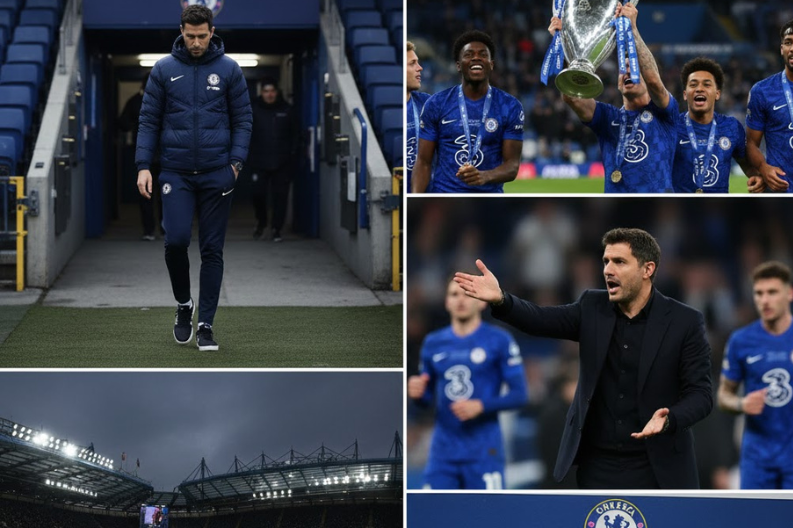
Chelsea Football Club parted ways with head coach Enzo Maresca on Thursday, bringing an end to his 18-month tenure at Stamford Bridge. The Italian manager’s departure comes after he informed club officials about holding talks regarding the Manchester City manager position. Moreover, his relationship with Chelsea’s leadership had deteriorated significantly in recent weeks.
Why Did Maresca Leave?
The primary reason for his exit involves a breakdown in relations with Chelsea’s hierarchy. Sources reveal that Maresca told club bosses twice in late October, and again in December, that he had discussed replacing Pep Guardiola at Manchester City. Furthermore, he attempted to use interest from Juventus and City as leverage for a new contract. However, Chelsea rejected this approach and refused to enter negotiations.
Recent Struggles and Tensions
Chelsea’s form had declined significantly before Maresca’s departure. The team won only one of their last seven Premier League games, dropping to fifth place. Additionally, they drew 2-2 with Bournemouth on Tuesday, which led to fans booing the team off the pitch.
| Maresca’s Chelsea Record | Details |
|---|---|
| Time at club | 18 months (July 2024 – January 2026) |
| Trophies won | UEFA Conference League, FIFA Club World Cup |
| Contract length | Until June 2029 |
| Final league position | Fifth place |
| Recent form | 1 win in last 7 games |
Key Issues Behind the Scenes
Several problems contributed to Maresca’s exit:
- Medical Department Clashes: Maresca wanted more freedom to ignore medical advice on player workloads. Chelsea, however, protects players through strict rotation policies to prevent injuries.
- Public Criticism: He made cryptic comments about experiencing his “worst 48 hours” at the club after beating Everton in December. These remarks surprised his own staff members.
- Player Management: The club became concerned when captain Reece James played three full games in one week despite his injury history.
- Fan Reaction: Supporters chanted “You don’t know what you’re doing” when he substituted Cole Palmer against Bournemouth.
Maresca’s Achievements
Despite the turbulent ending, Maresca achieved notable success at Chelsea. He guided the club back to Champions League football by finishing fourth in his debut season. In addition, he won both the Conference League and the inaugural Club World Cup.
What Happens Next?
Chelsea face Manchester City on Sunday without a confirmed manager. Under-21s head coach Calum McFarlane will handle media duties on Friday. Meanwhile, Liam Rosenior, who currently manages Strasbourg (Chelsea’s partner club), emerges as a leading candidate for the permanent position.
The club needs to act quickly as they still compete in four competitions. Consequently, they may appoint an interim manager while searching for a long-term solution.
Enzo Maresca becomes Chelsea’s fifth permanent head coach to leave since Todd Boehly and Clearlake Capital bought the club in May 2022. His departure highlights ongoing instability at Stamford Bridge despite recent trophy success.
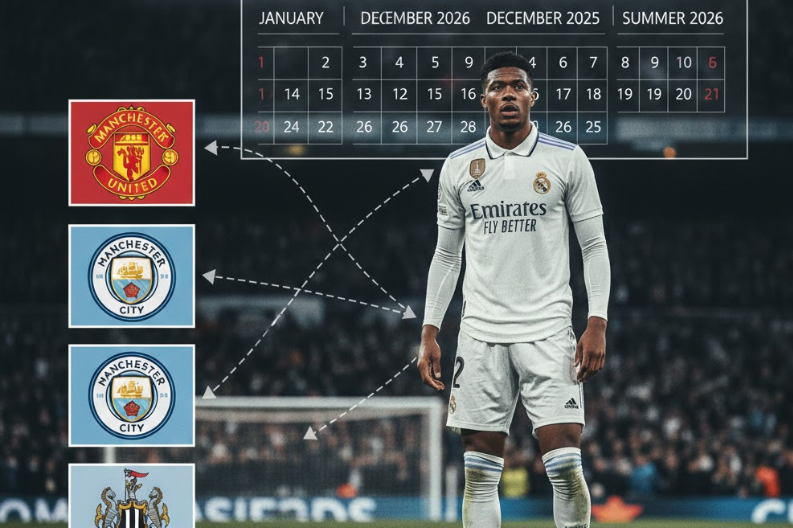
The football world is buzzing with speculation about Alexander Arnold and his challenging time at Real Madrid. The English defender made a controversial move from Liverpool to the Spanish giants last summer. However, things haven’t gone as planned for the 27-year-old.
Since joining Real Madrid, Alexander-Arnold has struggled to find his rhythm. He has made only 11 appearances across all competitions. Moreover, a quadriceps injury in December has sidelined him for several months. This lack of playing time has raised questions about his future at the Bernabéu.
Current Situation at Real Madrid
Several factors are contributing to the uncertainty:
- Limited game time with just 11 matches played
- Recent injury keeping him out for two months
- Difficulty adapting to Spanish football
- One assist recorded so far this season
Despite these challenges, both Alexander-Arnold and Real Madrid remain committed to each other. The player wants to stay and prove himself. Similarly, the club believes he needs more time to adapt.
Premier League Interest Growing
Nevertheless, three English clubs are monitoring the situation closely. Manchester United, Manchester City, and Newcastle United are all considering making offers. Reports suggest they might bid around €40 million for the defender.
For Manchester United, this move would be particularly controversial. Alexander-Arnold spent his entire career at Liverpool before joining Madrid. A transfer to United would cross one of football’s biggest rivalries.
Meanwhile, Newcastle United sees him as a valuable addition to their squad. They currently sit tenth in the Premier League and want to strengthen their defense.
Real Madrid’s Position
| Club Stance | Details |
|---|---|
| Current valuation | €40 million offers considered insufficient |
| Contract length | Runs until summer 2031 |
| Selling intention | No plans to let him leave |
| Club confidence | Believes in his potential |
Real Madrid paid a small transfer fee to Liverpool last summer. Any sale would generate significant profit for them. However, they have no intention of selling at this point.
What Happens Next?
The January transfer window has opened, but no immediate moves are expected. Instead, the summer of 2026 could be crucial. By then, Alexander Arnold will have had more time to prove himself in Spain. If things don’t improve, those Premier League clubs might return with stronger offers.
For now, everyone waits to see if the talented defender can overcome his struggles and establish himself at Real Madrid.
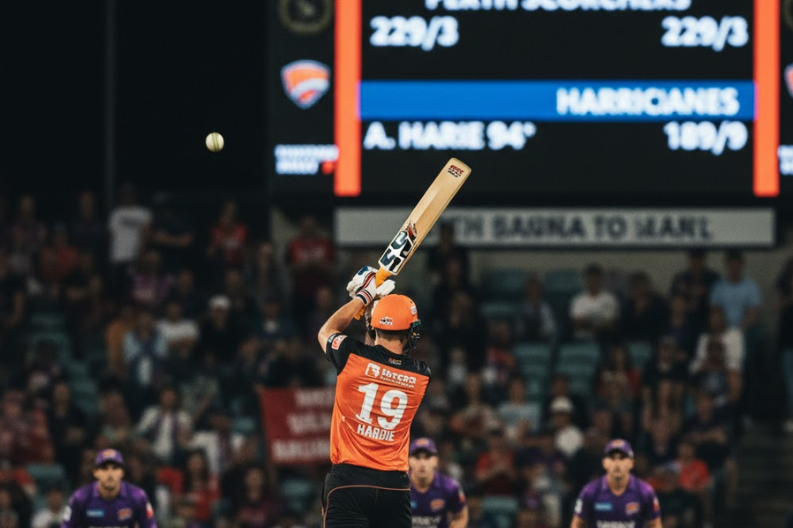
Perth Scorchers delivered a powerful performance at Bellerive Oval, with aaron hardie playing a starring role alongside captain Mitchell Marsh. The duo put on a record-breaking display that ended Hobart Hurricanes’ impressive nine-match winning streak at home. Consequently, the Scorchers moved up to third place on the BBL points table.
Record-Breaking Partnership
Mitchell Marsh scored 102 runs off 58 balls, while Aaron Hardie remained unbeaten on 94 from just 43 deliveries. Together, they created the highest third-wicket partnership in BBL history with 164 runs. Furthermore, their explosive batting powered Perth to a massive total of 229 for 3 wickets.
Match Highlights
| Team | Score | Result |
|---|---|---|
| Perth Scorchers | 3-229 | Won by 40 runs |
| Hobart Hurricanes | 9-189 | Lost |
The turning point came during the final 10 overs. Perth scored an incredible 149 runs in that period. Additionally, they added 38 runs during the Power Surge overs, which completely changed the game’s momentum.
Hardie’s Explosive Performance
Aaron Hardie particularly dominated Chris Jordan in the 12th over. He smashed four boundaries and one six, helping his team collect 26 runs from that over alone. His innings included five massive sixes and showcased his ability to accelerate when needed most.
Mitchell Marsh praised Hardie after the match, saying he deserved the player of the match award. However, Marsh himself received the honor for his century.
Hurricanes’ Chase Falls Short
Despite a strong effort, Hobart Hurricanes couldn’t keep up with the required run rate. They lost opener Mitchell Owen cheaply once again. Subsequently, they lost both openers during the powerplay, putting them under immediate pressure.
Nikhil Chaudhary scored 31 off 15 balls, while captain Matthew Wade added 29 from 14 deliveries. The pair put together a fighting 56-run partnership. Nevertheless, their dismissals in quick succession ended any hopes of a comeback.
Key Factors in Scorchers’ Victory
- Marsh’s second BBL century (102 off 58 balls)
- Hardie’s unbeaten 94 off 43 balls
- Record 164-run partnership for third wicket
- 149 runs scored in final 10 overs
- Disciplined bowling in crucial moments
Impact on Tournament Standings
This victory gave Perth Scorchers their second consecutive big win. Moreover, it boosted their confidence as they secured third position on the table midway through the season. Their record now stands at three wins and two losses.
Meanwhile, Hobart Hurricanes remain second on the points table despite this loss. Their record of four wins and two losses still keeps them in strong contention.
The match proved that aaron hardie has become a crucial player for the Scorchers. His ability to finish innings with such power makes Perth a dangerous team heading into the second half of the tournament.
-

 City Guide3 years ago
3B2 Mohali Market Shops: Discover 44 Hidden Gems
-

 Entertainment3 years ago
Top 15 Punjabi Models – Male and Female List
-

 Entertainment3 years ago
Top 11 Punjabi Comedians of All Time
-

 Jobs4 years ago
Top 20 IT Companies in Mohali
-
 Food4 years ago
11 Best Restaurants in Mohali You Must Visit
-

 Food3 years ago
Top 15 Cafes in Mohali you must visit
-

 Property2 years ago
Who Lives In Homeland Mohali: Punjabi Celebrities, Business People…
-

 Education2 years ago
10 Famous Punjabi Writers With A Great Impact On The Literary World